C∞-structure

Let Z=S(Z1,…,Zr) be an involutive distribution on a n-dimensional smooth manifold M. Let ⟨X1,…,Xn−r⟩ be an ordered collection of independent vector fields and define

Xk={Z1,…,Zr,X1,…,Xk}

for k=1,…,n−r; and X0={Z1,…,Zr}. We say that ⟨X1,…,Xn−r⟩ is a cinf-structure for Z if:

  1. Xk is a set of independent vectors for any p∈M and for every k=1,…,n−r.
  2. The vector field Xk is a C∞-symmetry of the rank r+k distribution S(Xk), for every k=1,…,n−r.

They remind me the idea of flag: we have in M not only a smooth field of k-planes (a distribution), but a smooth field of flags.

C∞-structures can be described from a dual point of view, i.e., by means of 1-forms ⟨ω1,…,ωn−r⟩.

The existence of a C∞-structure allows for integration by Pfaffian equations.

Shorter definition
An ordered collection of vector fields ⟨X1,…,Xm⟩ is a cinf-structure for the involutive distribution Z=S(Z1,…,Zr) if the distribution

S({Z1,…,Zr,X1,…,Xi})

has constant rank i+r and it is involutive for 1≤i≤m.
◼
They generalize solvable structures.

Visual scheme for the coefficients of a cinf-structure

The brackets of the vector fields {Zi,Xj} can be seen with the following picture (see [xournal 128]):
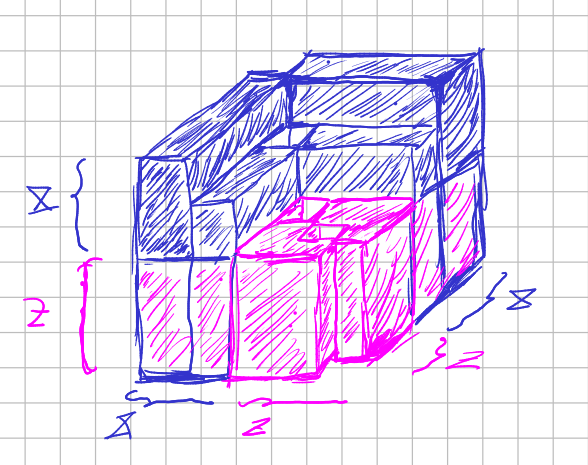
Pasted image 20211225173000.png

If the cinf-symmetry of distribution are in evolutionary form (in the sense of shuffling symmetries) the picture would be
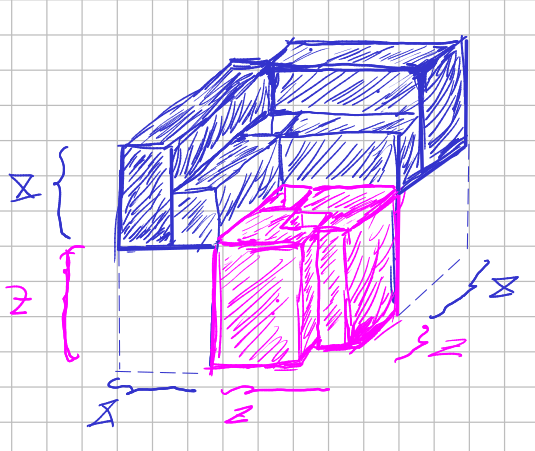
Pasted image 20211225173716.png

In the case of an ODE and a lambda-symmetry in canonical form the picture would be :
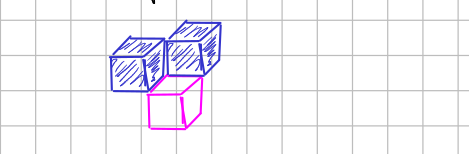
Pasted image 20211225174123.png

And for an ODE with a cinf-structure in diagonal form (that is, X1=∂u+…,X2=∂u1+…,X3=∂u2+…, and so on) the picture, I think, would be. UPDATE: I THINK THIS IS WRONG!
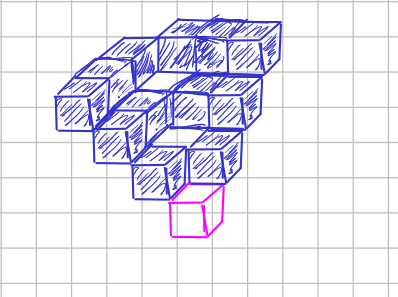
Pasted image 20211225174731.png

These pictures are the same for the cinf-structure of 1-forms. You have to take into account the result in the note coframe that relates the brackets of the frame with the exterior derivative of the coframe.
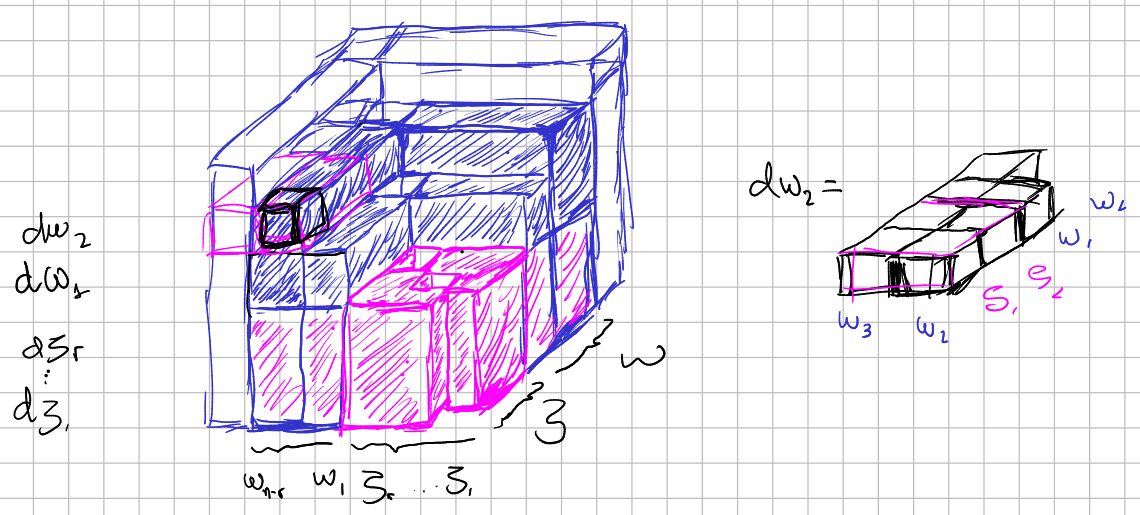
Pasted image 20211225175138.png

For the coefficients see also [xournal 129] page 2.

See also cinf-structure-based method